
A sudden, stabbing pain in your lower back or side can stop you in your tracks. For a growing number of families in Tirupattur, that pain turns out to be a kidney stone.
Tamil Nadu sits in what doctors call India’s “stone belt”, a region where hot weather, heavy sweating and low water intake make kidney stones especially common. Long summers, outdoor work and busy routines mean many of us simply do not drink enough water.
Why Are Kidney Stone Cases Rising in Tirupattur?
Kidney stones form when minerals such as calcium, oxalate and uric acid build up in concentrated urine and harden into crystals. Several everyday factors make this more likely.
1. Heat and Chronic Dehydration
Tirupattur’s hot, dry months cause heavy fluid loss through sweat. When you do not replace that water, your urine becomes concentrated, giving minerals the perfect chance to crystallise. People who work outdoors, travel long hours or work in hot indoor settings are at higher risk.
This includes farmers, construction workers, drivers and factory workers across Tirupattur, Vaniyambadi, Ambur and Jolarpettai.
2. Changing Dietary Habits
Packaged snacks, pickles, papads and restaurant food are high in salt, and excess salt pushes more calcium into the urine. Large portions of meat and other animal protein raise uric acid levels. Sugary soft drinks and colas add to the risk, especially when they replace plain water.
3. Lifestyle and Health Conditions
- Low physical activity and weight gain
- Diabetes, high blood pressure and obesity, which are all linked to stone formation
- Family history of kidney stones
- Holding urine for long periods, common among people with long shifts or long commutes
- Recurrent urinary tract infections
4. Better Awareness and Diagnosis
Part of the rise is also good news. Wider access to in-house ultrasounds means stones that once went unnoticed are now being detected and treated earlier.
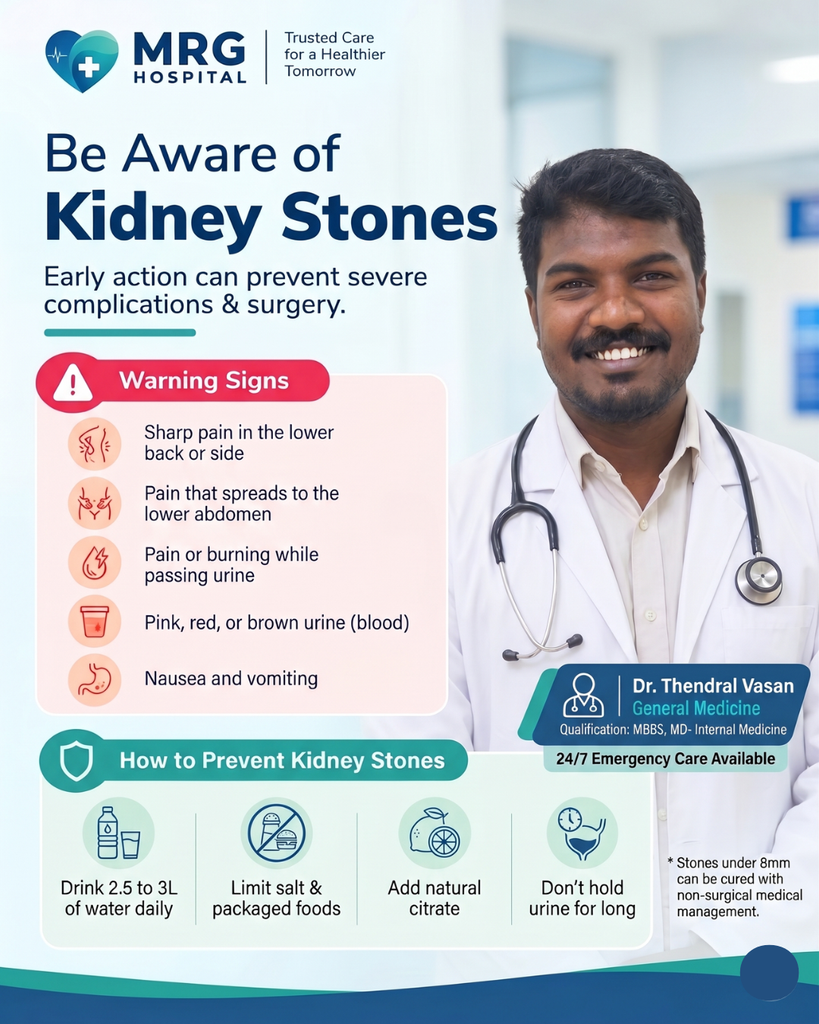
Kidney Pain Symptoms: Warning Signs You Should Not Ignore
Small stones may cause no symptoms at all. Once a stone moves into the ureter (the tube between the kidney and the bladder), the pain can be severe. Watch for these kidney pain symptoms:
- Sharp, cramping pain in the back, side or below the ribs
- Pain that spreads to the lower abdomen or groin
- Pain that comes in waves and changes in intensity
- Burning or pain while passing urine
- Pink, red or brown urine (blood in the urine)
- Cloudy or foul-smelling urine
- A constant urge to urinate, or passing only small amounts
- Nausea and vomiting
When Is It an Emergency ?
Go to the hospital immediately if you have:
- Fever with chills along with back pain (this can signal a dangerous infection)
- Pain so severe you cannot sit still or find a comfortable position
- Inability to pass urine
- Kidney pain if you have only one kidney, diabetes or are pregnant
Key takeaway: Do not rely on painkillers alone. A blocked, infected kidney needs urgent medical care.
Preventing Kidney Stones: Simple Daily Habits That Work
If you have had one stone, your chance of getting another is high. Preventing kidney stones starts with small, consistent changes.
Drink Enough Water Every Day
Aim for about 2.5 to 3 litres of fluid a day, and more in summer or if you work outdoors. Pale yellow urine is a simple sign that you are drinking enough. Keep a water bottle with you at work, in the vehicle and in the fields.
Add Natural Citrate Lemon water, buttermilk (mor) and tender coconut water are refreshing local choices. Lemon and other citrus fruits contain citrate, which helps block crystal formation.
Cut Down on Salt
- Limit pickles, papads, chips and packaged foods
- Taste food before adding extra salt
- Choose home-cooked meals over restaurant food when possible
Do Not Cut Out Calcium Many people believe calcium causes stones, but calcium from food such as curd, milk and ragi actually helps by binding oxalate in the gut. Take calcium supplements only on your doctor’s advice.
Watch High-Oxalate Foods and Animal Protein If you have had calcium oxalate stones, your doctor may advise moderating spinach, beetroot, nuts and strong tea. Keep meat, chicken and fish to moderate portions.
Stay Active and Manage Your Health Regular exercise, a healthy weight and good control of diabetes and blood pressure all lower your risk.
Key takeaway: Never follow “home remedies” that promise to dissolve large stones. Some can delay proper treatment and damage the kidney. Always consult an expert physician first.
Kidney Stone Treatment Options: What to Expect
Treatment depends on the size, type and location of the stone, your symptoms and your overall health.
Medical Management (No Surgery)
At MRG Hospital, our clinical approach focuses on structured medical management for uncomplicated kidney stones. We successfully treat and cure stones below 8mm with non-surgical medical care. Many small stones pass naturally with plenty of fluids, pain relief and targeted medicines (Medical Expulsive Therapy) that relax the ureter. Your doctor will monitor progress carefully.
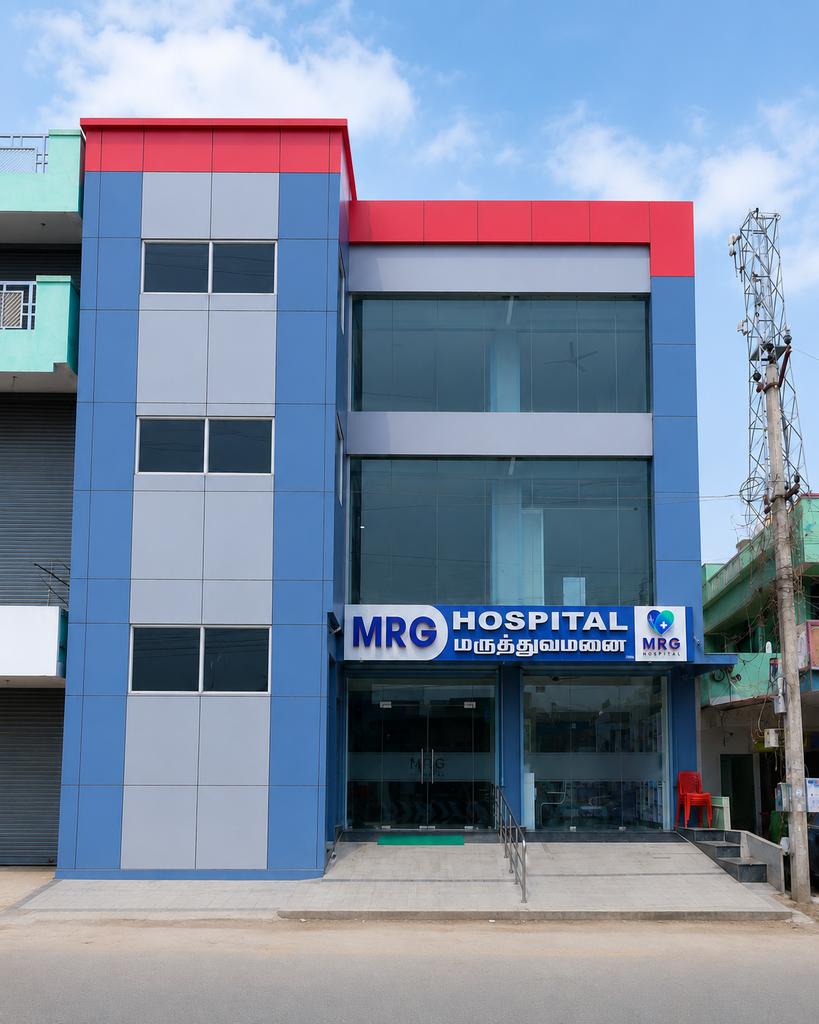
Why Choose MRG Hospital for Kidney Stone Treatment in Tirupattur?
Choosing the best hospital for kidney stones in Tirupattur means choosing expertise, technology and care under one roof. Here is what patients can expect from MRG Hospital Tirupattur.
Experienced Medical Specialists Our team is guided by experts like Dr. Thendral Vasan, MBBS, MD – Internal Medicine, with extensive experience in treating kidney and urinary conditions and guiding patients through medical management protocols.
Accurate, Same-Day Diagnosis
- Precision in-house ultrasound for accurate stone detection
- In-house laboratory for urine and blood tests
- Quick reports so treatment can begin without delay
24/7 Emergency Care Available Kidney stone pain often strikes at night. Our 24/7 emergency department is equipped and ready to relieve severe pain and manage blocked or infected kidneys at any hour of the day or night.
Prevention-Focused Follow-Up We do not just treat the pain. We help you understand why the stone formed, with expert medical guidance and diet support to lower your chance of it returning.
Compassionate, Local Care As a trusted hospital for families in Tirupattur and surrounding towns, our team explains every step clearly in Tamil or English.
Do Not Live With Kidney Pain: Book Your Consultation Today
If you are experiencing back or side pain, burning while urinating, blood in your urine or repeated urinary problems, do not wait for the pain to get worse. Early treatment is simpler, safer and protects your kidney health for the long term.
The medical team at MRG Hospital is here to help you get answers and relief, quickly. Call or visit us in Tirupattur to schedule your consultation today.
For severe pain, fever or inability to pass urine, come to our emergency department immediately – we are open 24/7.
Frequently Asked Questions About Kidney Stones
What is the first sign of a kidney stone?
The first sign is usually a sudden, sharp pain in the back or side, just below the ribs, which may spread to the lower abdomen or groin. It often comes in waves and may be accompanied by burning urination, blood in the urine, nausea or vomiting.
Can a kidney stone pass on its own?
Yes, many small kidney stones, usually under 5 mm, pass naturally within a few weeks with plenty of water and pain relief. Stones up to about 8 mm can often be medically managed and cured with non-surgical treatments at MRG Hospital.
How much water should I drink to prevent kidney stones?
Most adults should drink about 2.5 to 3 litres of fluid a day to prevent kidney stones, and more during hot weather or outdoor work. A simple check is your urine colour: pale yellow means you are well hydrated, while dark yellow means you need more water.
Disclaimer: This article is for general awareness and does not replace professional medical advice. Please consult a qualified physician for diagnosis and treatment.